
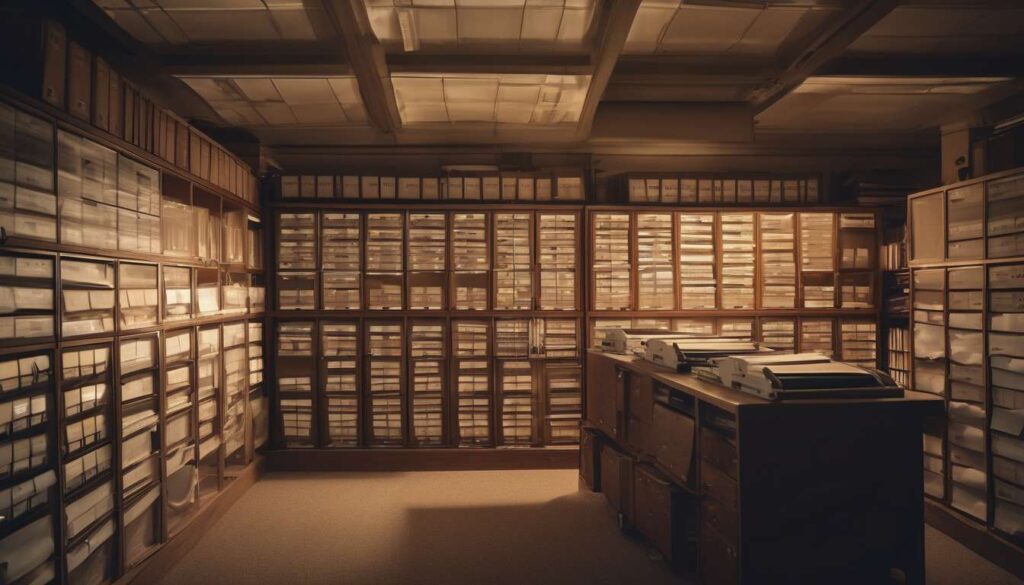
Perchance the files we preserve will outlast the judgments cast upon them. Can we reconcile the impulse to archive with the stigma that shadows adult content businesses? We believe so.
As archivists, historians, former industry workers, and curious citizens, we confront questions about legality, consent, and cultural value when we decide what to save.
Our project documents ledgers, contracts, marketing, and digital footprints that reveal labor practices, technological adaptation, and changing social norms—materials too often dismissed as unworthy of scholarly attention.
By preserving these records, we create resources for researchers, policymakers, and communities seeking transparency and context.
We also acknowledge ethical complexities: protecting privacy, navigating copyright, and resisting sensationalism.
This article lays out three core areas:
- Why digital archives matter for adult content enterprises.
- How we responsibly collect and curate their records.
- What these archives teach us about regulation, labor rights, and cultural memory.
Importance of Preservation
We need to preserve adult-content business records to protect legal evidence, cultural history, and the livelihoods tied to an often-stigmatized industry.
Digital preservation isn’t just technical — it affirms our shared memory and validates people’s work.
- Organizing files, metadata, and formats helps creators and workers trace authorship, contracts, and payments over time.
- Proper formats and migration plans reduce the risk of data loss and maintain evidentiary value.
We embrace consent protocols so contributors’ choices about reuse and visibility are recorded and respected.
- Consent records build trust within the community.
- Recording consent decisions allows granular control over how material is accessed and reused.
Practical access controls let us balance privacy with research and accountability.
- Role-based and tiered access ensure only authorized users reach sensitive material.
- Audit trails and logging provide accountability for who accessed what and when.
Treating records with care strengthens collective safety, provides reliable evidence when disputes arise, and preserves cultural nuance.
- Well-maintained archives support legal claims, labor disputes, and financial audits.
- Cultural context preserved in metadata prevents misrepresentation and erasure.
We’re building archives that welcome contributors, honor boundaries, and support livelihoods without shaming the people involved.
- Policies and interfaces should foreground dignity, consent, and clear undo or redaction paths.
- Outreach and transparent governance encourage participation and accountability.
Thoughtful preservation practices help our community belong to a documented, dignified history rather than being erased or misrepresented.
- Long-term stewardship, ethical guidelines, and community-informed policies are essential to sustaining that history.
Legal and Ethical Boundaries
We must clearly define legal limits and ethical principles that govern what we collect, how we store it, and who can see it.
We’ll outline boundaries that keep our community safe and compliant, grounding our digital preservation practices in law and shared values.
We agree on standards that prevent unlawful content acquisition and insist on provenance documentation for every item.
We’ll adopt robust consent protocols, with the understanding that consent legitimacy shapes collection decisions and retention schedules.
We’ll implement strict access controls and accountability measures:
- Only authorized colleagues and researchers with legitimate needs may access sensitive records.
- Access will be logged and audited to maintain accountability.
We’ll balance transparency with discretion by publishing policies that explain our ethical rationale, so contributors and stakeholders feel included and respected.
We’ll regularly review legal updates and ethical frameworks and invite community input, ensuring our stewardship remains responsive, inclusive, and trustworthy as technologies and norms evolve.
Consent and Privacy Protocols
We’ll require clear, documented consent and strict privacy safeguards before we collect, store, or share any personally identifiable or sensitive information.
We’ll build consent protocols that are explicit, revocable, and easy to understand, so every contributor feels respected and included.
We’ll explain why each data element is needed, how it supports digital preservation, and the retention limits that protect people’s futures.
We’ll enforce role-based access controls, audit logs, and encryption to ensure only authorized team members handle sensitive records.
We’ll offer contributors options for redaction, pseudonymization, or restricted-use agreements, and we’ll honor withdrawal requests promptly.
We’ll provide community-facing governance — regular reports, transparent policies, and channels for feedback — so stakeholders can trust our stewardship.
We’ll train staff on privacy-first handling, run periodic risk assessments, and update consent protocols as laws and community expectations evolve.
By centering consent, privacy, and accountable access controls, we’ll create a welcoming archive that preserves history without sacrificing personal dignity.
Acquisition Strategies
We will pursue a mix of donations, purchases, and partnerships to build a comprehensive, legally sound archive of adult-content business records.
Acquisition outreach:
- We’ll reach out to creators, agencies, and platforms with clear invitations to contribute.
- Emphasis will be on shared stewardship and community benefits to encourage participation.
Transparency and consent:
- Every transfer will follow documented consent protocols and licensing agreements so contributors feel respected and included.
- We’ll provide guidance and templates to help smaller participants donate confidently, knowing their rights are protected under our consent protocols.
Prioritization and due diligence:
- We’ll prioritize materials that strengthen collective memory and research value.
- We will negotiate fair purchase terms and mutually beneficial partnerships with rights holders.
- When accepting donations, we’ll perform due diligence to verify provenance and legal standing.
Access controls and preservation framework:
- We’ll use tiered access controls to balance openness with privacy and legal obligations.
- By combining ethical sourcing, practical agreements, and secure access controls within a digital preservation framework, we’ll create an archive where contributors belong and researchers can responsibly engage with preserved records.
Digitization and Storage Practices
We convert physical records and born-digital files into standardized, searchable formats and store them in redundant, encrypted systems that support long-term integrity and controlled access.
We establish clear workflows for scanning, format migration, and checksum verification so everyone on our team knows their role and can trust the process.
We prioritize digital preservation by choosing open, well-documented file formats and performing routine integrity checks to detect and repair bit rot before it spreads.
We integrate consent protocols at intake, documenting contributor permissions and retention limits alongside files so future stewards honor creators and subjects.
We design a tiered storage architecture to balance accessibility with cost:
- Hot: immediate-access storage for active files.
- Warm: intermediate storage for less-frequently accessed items.
- Cold: low-cost, long-term storage for archival materials.
We maintain geographic redundancy to reduce single-point failure risk and ensure availability.
We enforce strict access controls at the system level, tying permissions to roles and using audit logging to ensure accountability.
We regularly test restores from backups and rehearse incident response so our community can rely on preserved records being both secure and retrievable when needed.
Metadata and Access Controls
We’ll create consistent, machine-readable metadata frameworks and enforce role-based permissions so records are discoverable to authorized users and protected from misuse.
We’ll standardize descriptive, technical, and rights metadata to support digital preservation and to make provenance clear.
- This ensures everyone on the team knows what a record contains and why it’s retained.
- Standardization supports long-term access and integrity of files.
We’ll map metadata fields to controlled vocabularies and persistent identifiers to reduce ambiguity and foster trust.
- Controlled vocabularies increase interoperability across systems.
- Persistent identifiers (e.g., DOIs, ARKs) make records reliably referenceable for contributors and users.
We’ll pair metadata with robust access controls, logging, and tiered authentication so only vetted staff and researchers reach sensitive items.
- Role-based permissions limit access according to need and responsibility.
- Comprehensive logging provides an audit trail for access and changes.
We’ll embed consent protocols into metadata records so restrictions tied to performers, contracts, or takedown requests travel with the files across systems.
- Consent metadata records contractual or ethical constraints directly with the item.
- This reduces accidental misuse when content moves between platforms.
We’ll review and update policies collaboratively, balancing transparency with privacy, and we’ll audit permissions regularly to prevent drift.
- Establish a recurring policy-review cycle with stakeholder input.
- Run periodic permission audits and remediate inconsistencies.
- Document changes and communicate them to affected users.
By aligning metadata practices, consent protocols, and access controls, we’ll protect subjects, uphold legal commitments, and keep our archive usable and accountable for everyone involved.
Research and Policy Insights
We will analyze current research, legal trends, and stakeholder needs to inform policies that balance access, privacy, and regulatory compliance.
We will review studies on digital preservation to identify best practices that keep records authentic and usable while minimizing risk.
We will map evolving laws and case law affecting storage, sharing, and liability so institutions can adapt without leaving contributors exposed.
We prioritize clear consent protocols that respect performers, workers, and business partners.
- Define informed choices about retention, sharing, and redaction.
- Ensure consent language is understandable, specific, and revisitable.
- Include mechanisms for withdrawal, where feasible, and clear limits where it is not.
We recommend tiered access controls tied to role, purpose, and legal requirement.
- Role-based access to restrict who can view or manage sensitive records.
- Purpose-based access to limit data use to specific, documented activities.
- Legal-requirement layers to ensure compliance with subpoenas, reporting, and retention mandates.
We advocate for interoperable standards and audit trails to support accountability and research reproducibility.
- Use standard metadata schemas to document provenance, consent status, and redaction history.
- Maintain immutable audit logs for access, edits, and disclosures.
- Implement interoperable formats to enable secure transfer and long-term usability.
Together, we’ll frame policy guidance that centers safety, equity, and operational clarity.
- Align technical measures (encryption, redaction tools, access controls), legal obligations (retention limits, reporting), and community-informed consent protocols.
- Create governance processes for periodic review as laws, technology, and community expectations evolve.
- Ensure policies enable legitimate research and regulatory needs while honoring contributor autonomy and minimizing harm.
The goal is a sustainable model for preserving adult content business records that honors contributors and serves legitimate research and regulatory needs.
Community Engagement and Stewardship
We will build ongoing partnerships with performers, workers, researchers, and community groups to guide stewardship, decision-making, and accountability.
We will center voices affected by archiving choices and co-develop digital preservation strategies that reflect safety, dignity, and shared ownership.
We will create clear consent protocols that respect changing preferences and allow people to update or revoke permissions over time.
We will train community stewards in preservation practices and governance so care for records isn’t siloed.
We will implement layered access controls, balancing research and historical value with privacy and risk reduction, and we will document those rules transparently.
We will host regular forums and feedback cycles so policies evolve with the community’s needs, and we will publish decisions and rationales to sustain trust.
We will seek diverse funding and institutional partners while keeping community oversight central to prevent mission drift.
By embedding participatory stewardship, ethical consent protocols, and practical access controls into our workflows, we will preserve records responsibly and ensure everyone involved feels respected, heard, and invested in the archive’s future.
How do you handle copyright and licensing when making digitized adult content business materials available to researchers?
Assess rights status and identify rights holders.
We first determine whether the digitized business materials are in the public domain, unclaimed, or under copyright, and we identify the current rights holders where possible.
Obtain permissions and document agreements.
- Seek and secure written permissions from rights holders when available.
- Record the terms of any permissions obtained (scope, duration, fees, restrictions).
- Proactively update records if rights or permissions change.
Apply fair use analyses when permissions are not obtainable.
- Conduct and document a fair use assessment tailored to the specific use (purpose, nature, amount, market effect).
- Retain the analysis and rationale as part of the item’s rights record.
Set and communicate clear access levels.
- Open — materials available online without restriction.
- Restricted — access limited to authenticated users or approved researchers.
- On-site — access only within a supervised reading room or physical facility.
Document licenses, usage terms, and researcher guidance.
- Maintain clear license statements and usage terms attached to each digitized item.
- Provide guidance for researchers about permissible uses (copying, publishing, commercial reuse).
- Include contact paths and procedures for permissions requests.
Keep records current and provide contact mechanisms.
We’ll proactively update rights records and access designations as circumstances change, and we will provide clear contact information and procedures for users who need to request permissions or clarification.
What steps are taken to verify the provenance and authenticity of items donated or acquired from former adult industry businesses?
We review the Current Question by outlining verification steps we take.
Verification steps we use:
-
Gather documentary evidence.
- We collect donor histories, invoices, correspondence, and chain-of-custody statements.
-
Compare against authoritative sources.
- We compare materials to known catalogues, publication dates, and legal records.
-
Consult knowledgeable people and institutions.
- We consult former staff, industry experts, and corroborating institutions.
-
Record physical evidence.
- We photograph, digitize, and record physical identifiers.
-
Document uncertainty.
- We document gaps and uncertainty.
-
Communicate with stakeholders.
- We keep donors and communities informed so everyone feels included in preserving accurate provenance.
Are there specific measures to prevent the inadvertent distribution of illegal content (e.g., material involving minors or nonconsensual acts) during digital access or metadata sharing?
We prioritize preventing inadvertent distribution of illegal content.
- We screen collections and redact or restrict access to flagged items.
- We apply metadata suppression for sensitive descriptors.
We work with experts and maintain accountability.
- We consult legal counsel and child-protection specialists.
- We log access and require vetting for researchers.
We combine automated and human processes.
- We use automated detection tools alongside human review.
- We will suspend sharing if concerns arise.
Our overall goal.
- We ensure our community stays safe and compliant while preserving legitimate historical materials.
Conclusion
You’re responsible for preserving adult content business records thoughtfully, balancing historical value with legal and ethical limits.
Key requirements:
- Clear consent and privacy protocols — Obtain documented consent where possible; define privacy thresholds and procedures for sensitive personal data.
- Careful acquisition strategies — Assess provenance, legal rights, and potential harms before accepting collections.
- Secure digitization and storage — Use trusted formats, encryption at rest and in transit, integrity checks, and reliable backups.
- Precise metadata and access controls — Record provenance, restrictions, and consent status; implement role-based access and request/approval workflows.
Practice and governance:
- Use research to inform policy — Base retention, redaction, and access policies on legal standards, ethical scholarship, and emerging best practices.
- Involve communities to guide stewardship — Consult performers, producers, subject communities, and legal experts to shape respectful policies.
- Document decisions transparently — Keep clear audit trails of acquisition choices, redactions, access requests, and policy changes.
Expected outcomes:
- Protect individuals’ rights — Minimize harm through privacy-preserving practices and consent-centered workflows.
- Support responsible scholarship — Enable research while enforcing ethical and legal guardrails.
- Ensure accountable access for future generations — Maintain well-documented, secure, and governed collections that balance preservation with responsibility.