
I believe rigorous workplace training is the most underrated productivity tool in adult content production.
We have watched teams transform when studios treated performers, directors, and crew as professionals deserving of structured learning.
Examples of training focus areas include:
- Consent protocols and communication techniques.
- On-set safety procedures and emergency response.
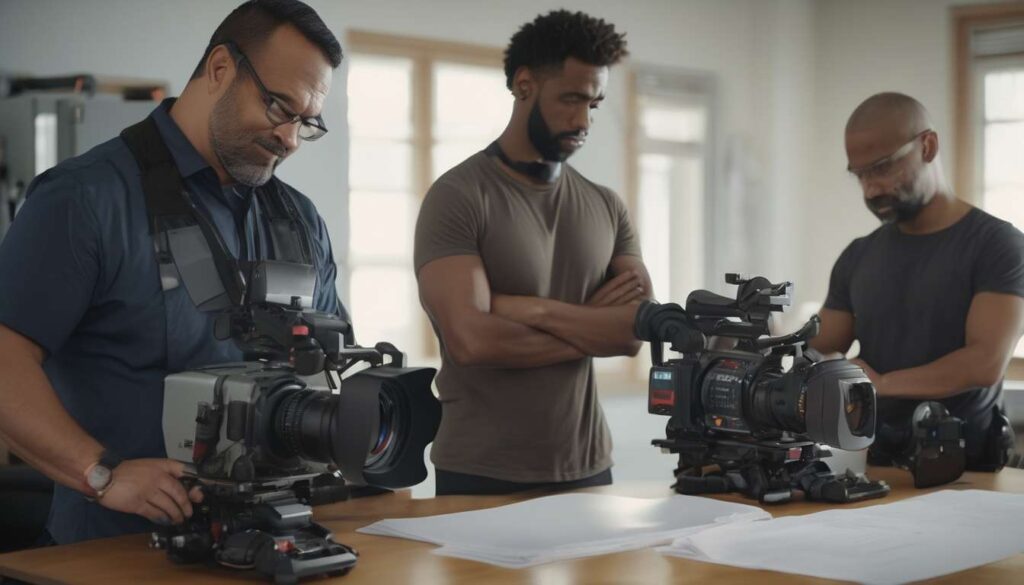
- Technical skills (lighting, camera, sound, editing).
- Brand management and career development.
We see measurable benefits when training is consistent, comprehensive, and respectful of industry realities.
Observed outcomes include:
- Reduced turnover.
- Fewer on-set incidents.
- Higher-quality output.
We acknowledge the stigma that has long kept this work hidden from standard workforce development, and we are committed to changing that.
Our approach is to document practical training models that prioritize dignity and safety, including:
- Clear curricula tailored to roles (performer, director, crew).
- Accessible delivery formats (in-person workshops, online modules, mentorship).
- Mechanisms for feedback and continuous improvement.
We know that investing in continuing education builds sustainable careers and elevates creative standards while protecting everyone involved.
Long-term benefits for the ecosystem include:
- Stronger production workflows and operational reliability.
- Greater performer autonomy and informed consent.
- A culture of professionalism that benefits studios, talent, and audiences alike.
This article outlines how targeted workplace training can strengthen production processes and support both ethical and creative goals.
Training Program Foundations
Foundations: clear objectives, measurable outcomes, and role-specific competencies.
We will ground our training program in clear objectives and measurable outcomes, and define role-specific competencies so everyone understands what success looks like.
Measurable outcomes and assessment methods.
We set measurable outcomes using:
- Skill checklists
- Observed simulations
- Periodic assessments
These methods let people see progress and feel secure in their roles.
Role-tailored modules with cross-role understanding.
We tailor modules to distinct positions while encouraging shared language and expectations among performers, technicians, and producers.
Emphasis on practical scenarios and supervised practice.
We prioritize practical scenarios over theory by using:
- Role-play
- Supervised practice
These reinforce safe behaviors and professional growth.
Ongoing reinforcement: refreshers, mentorship, and feedback.
We schedule refresher sessions and mentorship pairings to sustain learning and support advancement pathways.
We collect anonymous feedback and adjust content to reflect evolving needs, maintaining transparency about goals and evaluation methods.
Outcomes: trust, belonging, wellbeing, and career development.
This approach builds trust and belonging, protects wellbeing, and supports long-term career development within the industry.
Consent and Communication
We will establish clear, documented consent processes and communication protocols that everyone follows before, during, and after each scene.
We will make consent training a routine part of onboarding and rehearsal so each team member knows how to give, request, and withdraw consent safely and respectfully.
We will use shared language and checklists to remove ambiguity, creating a culture where questions are welcomed and boundaries are honored.
We will hold regular meetings to reassess comfort levels and adjust scenes.
We will record agreements in accessible formats so people feel secure and included.
We will tie these practices to career development by offering feedback, mentorship, and opportunities to lead consent-focused initiatives, reinforcing that respect advances both safety and professional growth.
We will ensure there are confidential channels for raising concerns and clear steps for resolution.
By centering consent training and transparent communication, we will build belonging and trust across our productions while supporting personal agency and on-set safety without sacrificing artistic collaboration.
On-Set Safety Protocols
We will establish clear, practical safety protocols and rhythms that everyone follows before, during, and after each scene to prevent harm and respond quickly if issues arise.
We will create checklists, designate safety leads, and run briefings that reinforce consent training and emergency steps so every person feels seen and supported.
- Briefings will cover roles, stopping signals, and emergency procedures.
- Safety leads will be empowered to pause a scene without penalty.
- Checklists will be used consistently to confirm preparedness.
We will name channels for raising concerns without fear, and practice de-escalation and stopping signals until they become second nature.
- Channels may include anonymous reporting, a dedicated on-set communicator, and a post-shoot feedback form.
- Stopping signals (verbal and non-verbal) will be rehearsed and respected immediately.
We will schedule regular safety reviews that connect on-set safety to broader career development, showing how professionalism and reliability build trust and opportunities.
- Hold periodic audits and debriefs.
- Share lessons learned in team trainings.
- Integrate safety performance into professional development conversations.
We will document incidents and near-misses transparently, learning collectively rather than blaming.
- Incident logs will record facts, responses, and improvement actions.
- Near-miss reporting will be encouraged to prevent future harm.
We will ensure access to medical care, mental health resources, and clear rest breaks to sustain wellbeing.
- Medical protocols include on-call providers and an established transport plan.
- Mental health resources include referrals and confidential support.
- Rest breaks will be clearly scheduled and enforced.
By making protocols routine, we will cultivate an inclusive culture where newcomers and veterans alike belong, contribute, and grow.
We commit to continuous improvement, soliciting feedback after shoots and updating practices so safety is a shared responsibility that advances everyone’s career.
Technical Skill Development
We’ll build targeted technical training—covering camera blocking, lighting for intimacy, microphone placement, and safe choreography—so crew and performers can execute scenes confidently and consistently.
We’ll teach hands-on techniques that honor boundaries and reduce surprises: clear cues, camera positions that respect comfort, and lighting setups that preserve privacy while achieving vision.
We pair these skills with consent training and on-set safety refreshers so everyone shares language and expectations before rolling.
We’ll run small-group labs where people rotate roles, giving technicians empathy for performers’ needs and performers fluency with equipment.
Trainers will use checklists, timed drills, and problem-solving scenarios to build muscle memory and mutual trust.
By standardizing workflows—call sheets, cue systems, and hazard reporting—we reduce risk and increase predictability.
Our approach centers community: we welcome questions, normalize feedback, and celebrate skill gains.
That practical, respectful technical training strengthens teamwork, supports on-set safety, and creates pathways for career development without conflating creative craft with personal boundaries.
Career and Brand Education
We’ll teach performers how to build sustainable careers and distinct brands—covering contract negotiation, platform strategy, financial planning, and reputation management.
We create a supportive space where everyone feels seen and valued, and we pair practical guidance with peer mentoring so no one navigates career development alone.
We’ll explain clear steps for negotiating fair terms, diversifying income, and protecting intellectual property, and we’ll tie those lessons to consistent brand messaging that reflects personal values.
We integrate consent training and on-set safety into brand conversations so professionalism and boundaries become part of public identity.
We’ll run workshops on:
- Audience engagement.
- Collaboration etiquette.
- Long-term tax and retirement planning.
These workshops will emphasize:
- shared resources,
- collective bargaining options,
- peer-to-peer support.
Our goal is to cultivate confident creators who make choices aligned with their well-being and goals, and who know how to leverage networks, track metrics, and pivot when markets shift.
We want every team member to belong to a resilient career community.
Delivery Methods and Formats
Delivery formats:
We’ll deliver training through a mix of live workshops, on-demand modules, peer-led cohorts, and one-on-one coaching so teams can access learning in the formats that fit their schedules and learning styles.
Live workshops (short, focused):
- Designed for consent training and on-set safety scenarios.
- Include role-play and immediate debriefs to practice and reinforce behaviors.
On-demand modules:
- Cover policy, boundaries, and career development pathways.
- Available for private, self-paced review.
Peer-led cohorts:
- Build community by sharing experiences and modeling respectful interactions.
- Practice consent scripts together to increase confidence and peer support.
One-on-one coaching:
- Supports individualized career development plans and skill refinement.
- Offers confidential space to discuss concerns.
Accessibility and curriculum design:
- Use concise curricula and clear learning objectives.
- Provide accessible materials: captions, transcripts, and mobile-friendly lessons to include neurodiverse and differently-abled colleagues.
Scheduling and participation:
- Mix sessions across shifts to ensure participation without pressure.
Overall program goal:
By offering blended delivery methods, we create a dependable, inclusive program that strengthens on-set safety, deepens consent training, and advances everyone’s career development.
Feedback and Improvement Systems
Continuous, anonymous, structured feedback channels
We’ll implement continuous, anonymous, and structured feedback channels that let team members report issues, suggest improvements, and track responses in a timely, accountable way.
Key features:
- Anonymous submissions with optional contact information for personalized follow-up.
- Structured intake forms to capture context, desired outcomes, and urgency.
- Acknowledgement workflow so moderators confirm receipt and outline next steps.
Outcome: Clear, consistent reporting that balances anonymity with the ability to provide tailored support when requested.
Open, safe sharing about training and safety
We’ll invite everyone to share experiences about consent training and on-set safety without fear, and we’ll ensure moderators acknowledge each submission and outline next steps.
Practices:
- Moderator acknowledgment within a defined timeframe.
- Transparent next steps communicated to the reporter.
- Safe-space norms and guidance for respectful, non-retaliatory dialogue.
Outcome: Increased trust that concerns are heard and handled respectfully.
Regular pulse surveys and open forums
We’ll run regular, brief pulse surveys and open forums so voices from every role inform adjustments to protocols, schedules, and resources.
Structure:
- Short, frequent pulse surveys focused on specific topics.
- Periodic open forums (virtual or in-person) with rotating facilitators.
- Summary reports highlighting themes and proposed actions.
Outcome: Continuous input from diverse roles guiding pragmatic adjustments.
Dedicated, transparent response team
We’ll route safety concerns to a dedicated response team that acts transparently and closes the loop with complainants.
Responsibilities:
- Triage incoming reports and assign appropriate response levels.
- Communicate progress and outcomes to complainants.
- Escalate serious matters to senior leadership or external resources as needed.
Outcome: Timely, accountable handling of safety issues with visible closure.
Documenting themes and prioritizing change
We’ll document recurring themes and prioritize changes that improve dignity, trust, and career development pathways.
Process:
- Aggregate and analyze submissions for recurring patterns.
- Prioritize interventions that enhance respect, safety, and professional growth.
- Set measurable criteria for success and timelines for implementation.
Outcome: Focused improvements that strengthen workplace culture and career pathways.
Coaching and development linked to feedback
We’ll offer coaching and follow-up sessions when feedback indicates skill gaps or leadership issues, linking development plans to clear milestones.
Approach:
- Offer confidential coaching or mentoring options.
- Create development plans with specific goals, timelines, and check-ins.
- Tie progress to recognition and career development opportunities.
Outcome: Targeted support that improves skills and leadership while preserving dignity.
Anonymity, transparency, and published progress
We’ll protect anonymity while enabling personalized support when requested, and we’ll publish aggregated results and action timelines so the whole crew sees progress.
Practices:
- Maintain anonymized reporting for public summaries.
- Publish periodic aggregated reports and a dashboard of action timelines.
- Communicate wins and next steps to the entire team.
Outcome: Trust through privacy protections and visible accountability.
Simplicity, fairness, and shared ownership
We’ll treat feedback as a shared tool for growth, keeping processes simple, fair, and focused on sustaining a supportive, professional environment.
Principles:
- Keep processes easy to use and clearly documented.
- Ensure fair, unbiased handling of all submissions.
- Encourage collective responsibility for a respectful workplace.
Outcome: Sustainable feedback practices that reinforce dignity, trust, and professional standards.
Measuring Training Outcomes
We will define clear, measurable indicators and data sources so we can track how well our training changes knowledge, behavior, and on-the-job safety.
Specific metrics will include:
- Pre/post assessment scores for consent training.
- Frequency of reported near-misses for on-set safety.
- Promotion or skill-application rates for career development.
We will collect data through multiple, confidential methods so everyone feels safe participating:
- Anonymous surveys.
- Skills demonstrations.
- Incident logs.
- Supervisor observations.
We will analyze trends quarterly, disaggregated by role and experience, to spot gaps and celebrate progress.
We will use short pulse surveys after sessions to measure confidence and immediately adjust content.
We will tie learning outcomes to concrete behavioral markers, for example:
- Documented use of consent checklists.
- Adherence to safety protocols during shoots.
We will report findings in inclusive, accessible summaries and invite team input on next steps.
By grounding evaluations in transparent, shared metrics, we will build trust, improve practices, and reinforce that training benefits both individual growth and collective well-being.
How do training programs address the mental health and emotional aftercare needs of performers and crew following particularly intense or vulnerable shoots?
We train teams to recognize post-shoot stress and ensure immediate check-ins, debriefs, and optional cooling-off periods.
We offer on-site counselors, peer support circles, and clear referrals to mental-health professionals.
We create confidential follow-up routines, flexible scheduling for recovery, and resources on coping strategies.
We encourage open dialogue, normalize emotional aftercare, and, if needed, adjust future shoots to prioritize wellbeing and consent.
What specific steps are taken to protect trainees’ and employees’ personal data and identities when training involves real-case examples or recorded sessions?
We protect personal data and identities when training uses real cases or recordings.
We anonymize and redact identifying details.
We obtain explicit informed consent with opt-out options.
We store files on encrypted, access-limited systems.
We prefer role-play or simulated scenarios where possible.
We log and audit access and regularly train staff on privacy protocols.
We delete or archive materials on a set schedule and respond promptly to data-removal requests.
How are cultural competency and inclusivity issues (e.g., handling diverse gender identities, body types, disabilities, or cultural norms) integrated into training beyond basic consent and communication modules?
We will expand cultural competency beyond consent by co-creating inclusive curricula with diverse advisors, modeling respectful language and pronoun practices, and offering scenario-based workshops that cover varied gender identities, body types, disabilities, and cultural norms.
We will provide adaptive production options, accessibility checklists, and ongoing reflexive coaching to challenge bias.
We will measure progress with:
- Participant feedback — regular surveys and qualitative debriefs to capture lived experience and perceived safety.
- Representation metrics — tracking diversity among participants, advisors, and materials to ensure visibility across identities.
- Accountability mechanisms — clear reporting paths, remediation steps, and governance to address issues and enforce standards.
Goal: ensure everyone feels seen, safe, and valued.
Conclusion
You’ve seen how a training program builds consent, communication, safety, technical skill, career growth, and feedback into on-set practices.
By using varied delivery methods and clear outcome measures, you’ll create consistent standards that protect performers, uplift production teams, and strengthen brands.
Keep adapting content from real feedback and metrics so training stays relevant.
Commit to ongoing improvement, and you’ll foster safer, more professional workplaces that support sustainable careers in adult content production.